



- WORKFORCE ANALYTICS · powered by real-time location (RTLS)
The right people in the right place, at the right time.
Compare planned crews with actual presence on site, area by area and trade by trade, and act before waste adds up.
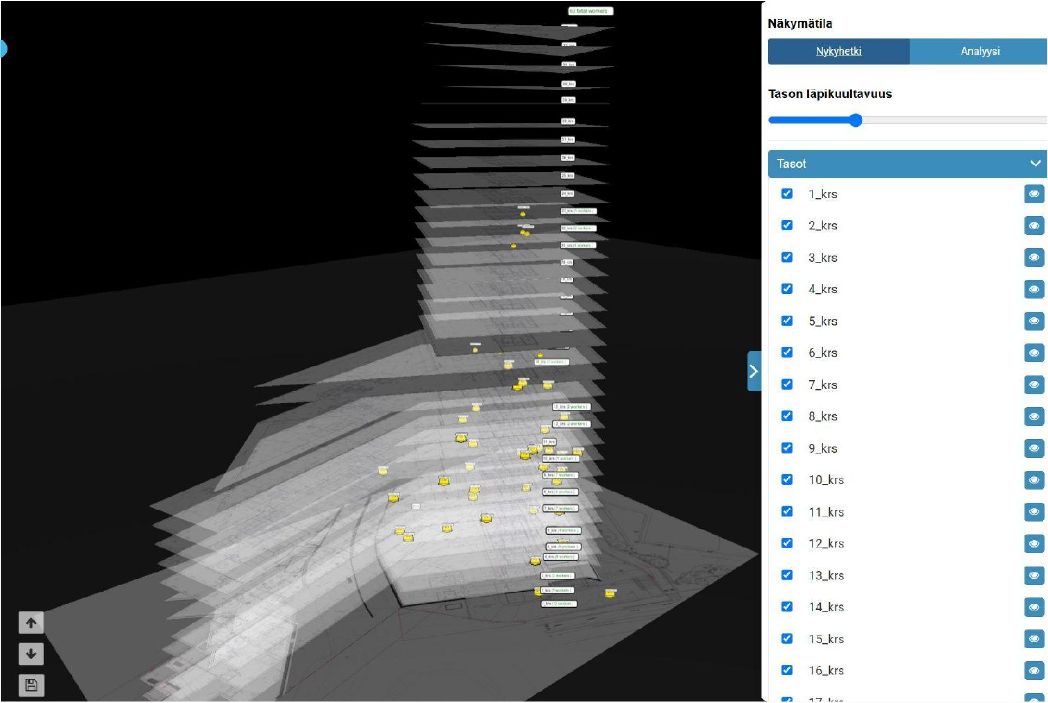
The plan says who should be where. The site rarely knows who actually is.
Trades follow each other. On every project, one crew’s work enables the next. A crew that is missing or in the wrong place holds up those who follow.
Checking takes effort. Headcount and location are usually checked by walking the site, calling around and reading reports. By then, the answer is already old.
Beacons are installed in the selected work areas, and workers wear anonymous tags linked only to a trade. Every day, planned vs. actual works in five steps:
- Plan: task, time, area, headcount and trade
- Detect: tags seen in the area, by trade
- Compare: planned against observed presence
- Alert: the deviation goes to the person responsible
- Act: site management verifies the cause and agrees an action with the contractor
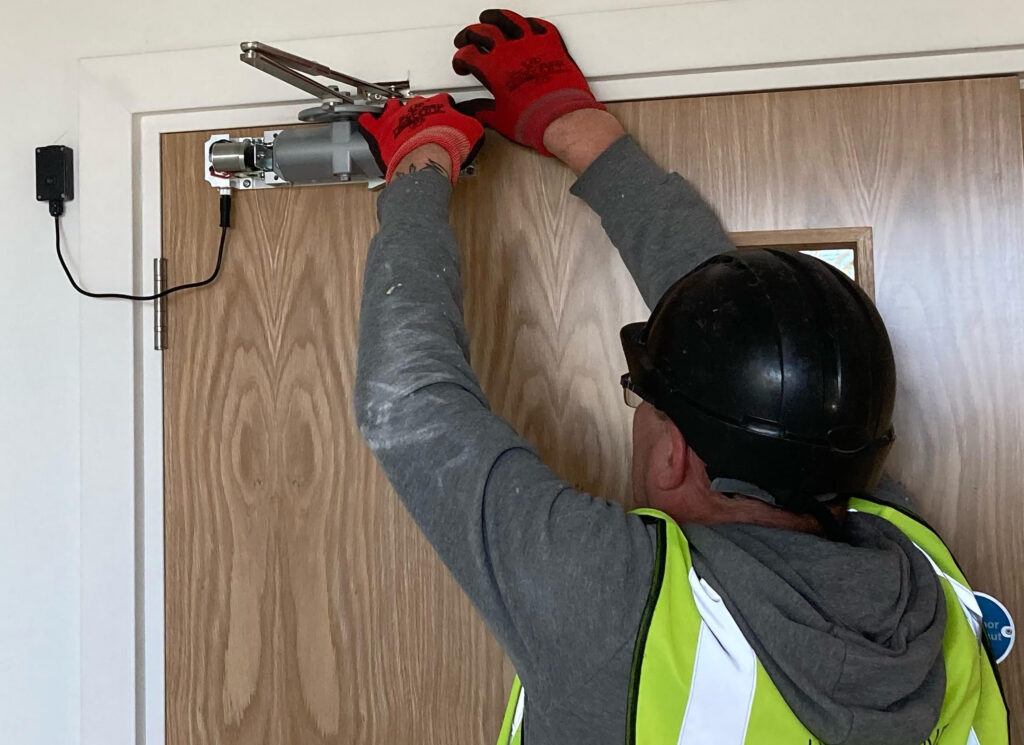
Five drywall installers in the plan. Three tags on floor 3.
Same task window, same area, two short of plan. The alert goes to the person responsible, who checks the situation with the contractor the same morning.
What planned vs. actual location data reveals
- Crew in the wrong area: tags for the trade show up somewhere other than the planned work area.
- Below planned headcount: fewer tags than the plan needs for that trade, task and time.
- Late start or early finish: the presence window is shorter than the planned working hours.
- Staffed but waiting: the full crew is present, but progress is not following. Check materials, drawings and preceding works.
The observation guides the investigation. Site management verifies the cause.
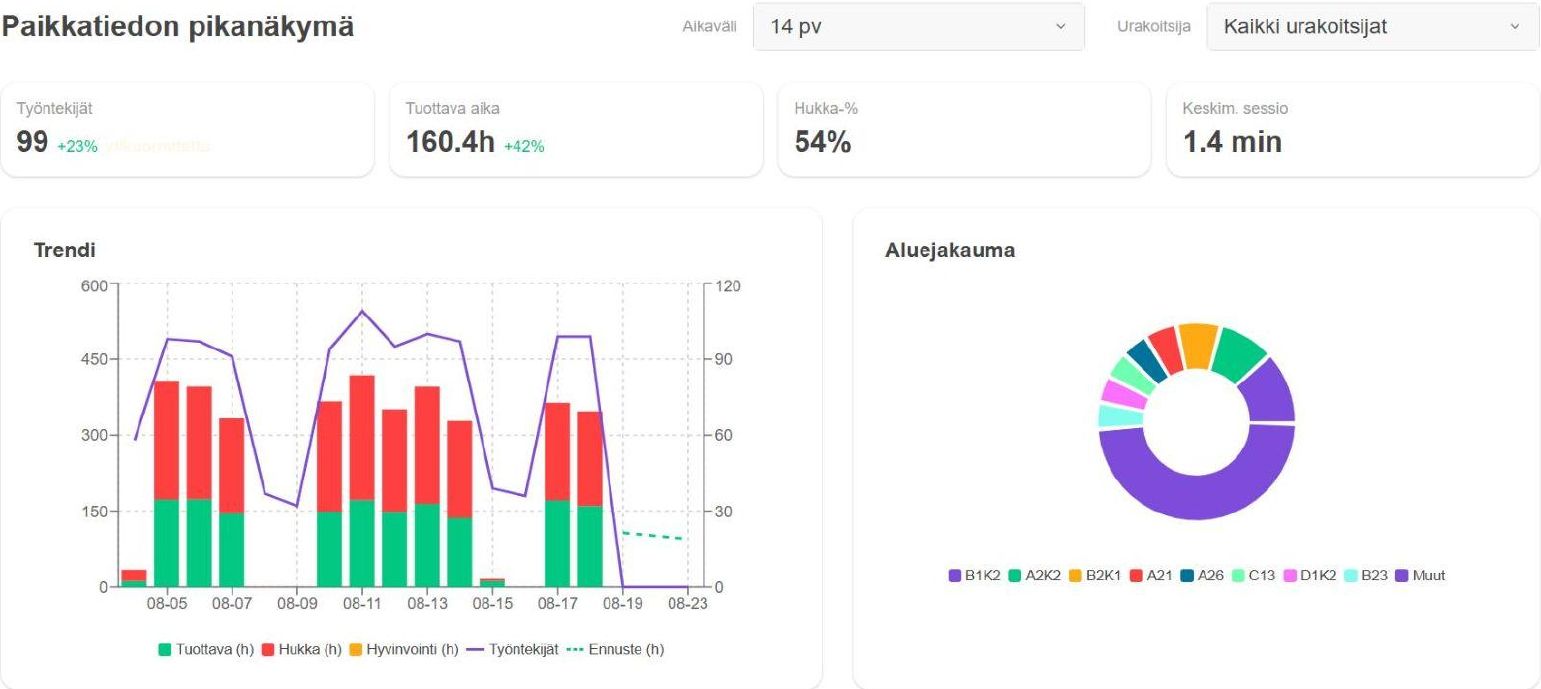
Productive time and waste hours, by area and contractor
Presence is measured as uninterrupted time slots of at least 10 minutes in each work area. Track trends rather than snapshots, compare labour input with progress before drawing conclusions, and use the data to plan resources for upcoming works.
What makes planned vs. actual trustworthy
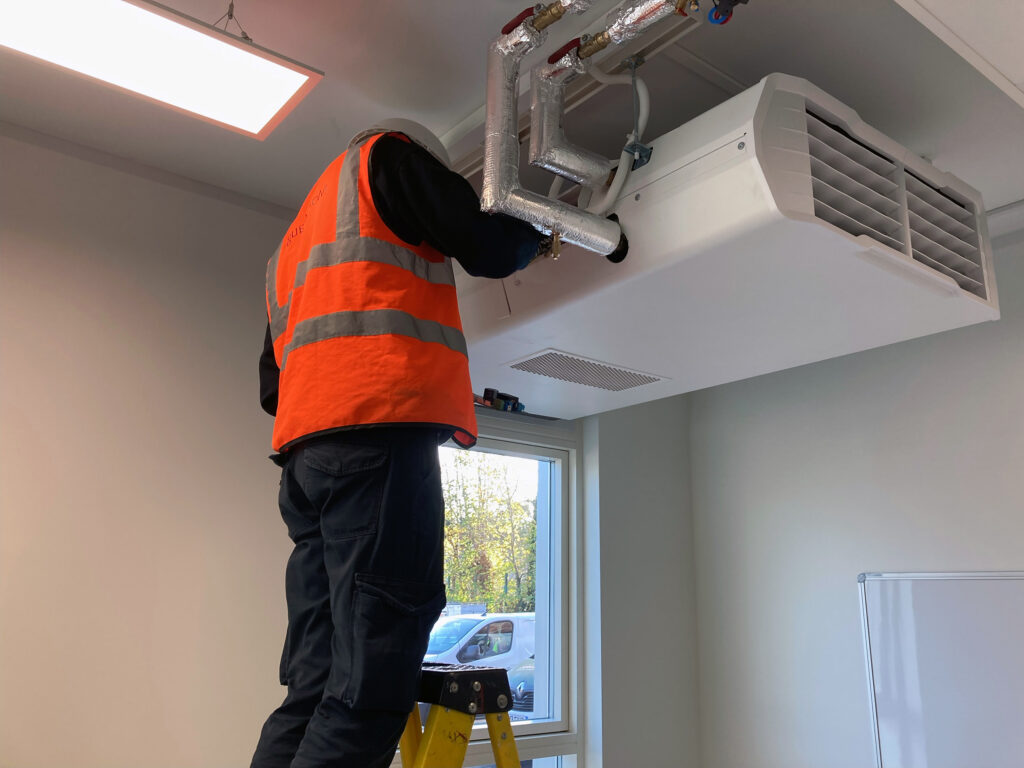
- A precise daily plan: task, time, area, headcount and trade. Without them, there is nothing to compare against.
- Tags for everyone in scope: contractors in the monitored trades wear tags, written into subcontracts and site induction.
- Coverage designed per area: location coverage is planned for the building, with accuracy that fits the decision, and checked early.
- Data and privacy agreed up front: tags are anonymous and linked only to a trade. Individual performance is not monitored, and access rights and data handling are agreed under local law.
Know how many people are on each floor
In an emergency, the system shows in real time how many people are in each area. This supports a fast and safe evacuation, especially on large and tall building sites.
Even stronger with the rest of Aiforsite
Workforce Analytics shows where the crews are. Combined with the other Aiforsite modules, it also shows what that means for progress and what to do next.
- 360 Reality Capture: verify that progress follows presence
- Site Cameras: see the situation in the area right away
- Wendy AI: daily summaries and recommended actions
- Workflows: automatic checks, such as planned resources or work permits against presence on site
Proven across construction
Wherever trades follow each other, planned vs. actual location data helps keep the work flowing. Workforce Analytics is used on high-rise, renovation, underground and industrial projects, among others.
- Mace, Peterborough Court, London: RTLS and Wendy AI revealed workforce movement and opportunities to improve productivity
- SRV Nissniku, Kirkkonummi: Construction Site of the Year 2026, with resource visibility by production area and alerts on deviations
- The Node, Pasila, Helsinki: Finland’s tallest office building, developed by Varma
- Varanto, Vantaa: Vantaan Energia’s cavern thermal energy storage, the largest of its kind in the world
Where would a missing crew hurt you most?
Start with one area
Pick one area and agree the tasks, trades and planned headcount. Run planned vs. actual with daily reviews, then measure productive and waste hours against an agreed baseline and extend proven practice to further areas.